CLUMBER COMMUNITY EDUCATION
SCHOOL FACILITIES
The first record of schooling at Clumber reflected a date of 1837, when a day school was in operation in the first school built at Clumber. Thomas Peel was appointed as schoolmaster, a position he held until 1848. Prior to this the Churches were used as places of education.
In November 1837, tenders were called for the erection of a schoolmaster's house next to the Church. . Thomas Peel was replaced by James Haller in 1848 and he was paid £30 per annum. He was also responsible for the cleaning of the Church and had an allowance of 19/6 for expenses for this task.
In January 1850 William Cadwallader became the new headmaster and he also served as the local preacher. In October, as the threat of another border war loomed , plans were made to move to a defended Camp on Edward Timm’s farm, Prospect. ( This was the Eighth Border War 1850 - 1853) It was decided that as this site was located on a more open site than the Church, it would be easier to defend. On 23 December 1850 the children were examined and commenced a holiday of 3 weeks , but this was interrupted by the opening of hostilities and on 27 December 1850 the move to Prospect commenced.. Wattle and daub houses and wagons were used as accommodation. War continued throughout 1852 and ended in March 1853 and school only resumed once more on 7 March 1853. A new teacher, , William Smailes , was appointed in 1861.
By September 1873, the second Church of 1837 had been taken down and a new school-room was built.This school was enlarged in 1875 and the Chapel Committee agreed to allow the Albany Farmers' Friend Lodge of the Independent Order of Good Templars to use it for their meetings.
In 1903 it was decided that another School be built which was then opened in 1905.
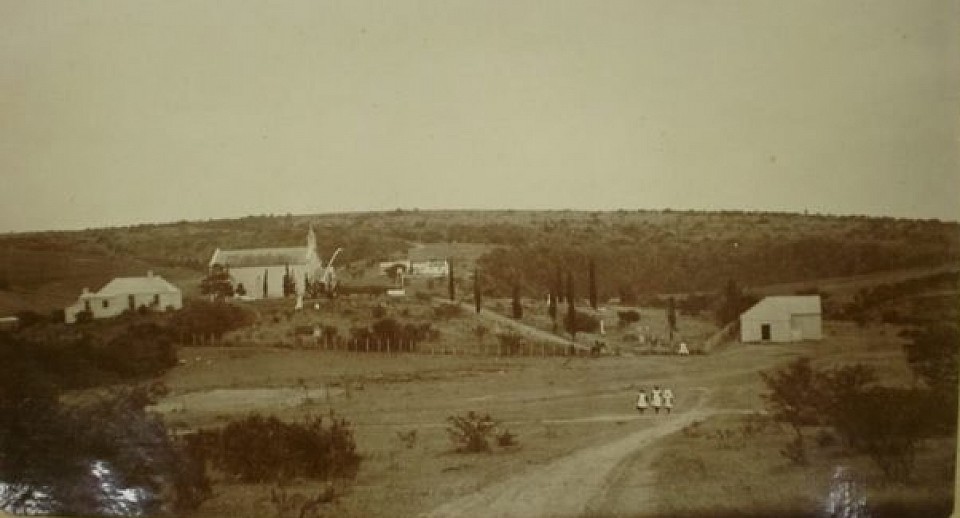
Schoolmaster's House (L) built in 1837 , School (R) built in 1873 and enlarged 1875
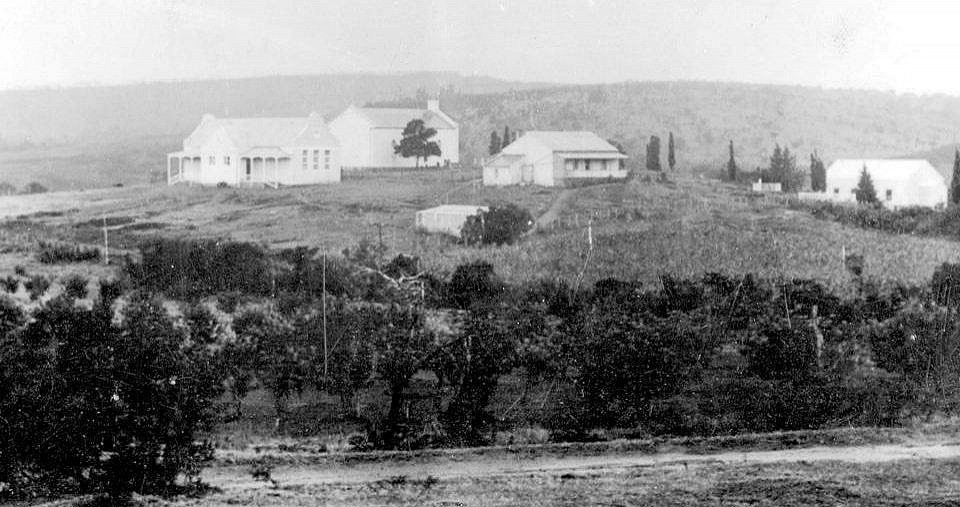
Clumber Community Buildings taken between1905 and 1919 : School ,Church, School Masters Home, Community Hall
A NEW SCHOOL IS BUILT

Clumber Public School photographed in 1913
The Clumber Public School
In September 1902, the Trust Properties Committee resolved that an acre of Church ground be made available for the erection of a Government- aided Public School. In the following month they made arrangements for the renovation of the School-master's house , built in 1837, at a cost of £250.
In July 1903, the Reverend John Smart took over as resident minister and Elizabeth Trower promised to build a new Day School for Clumber, in memory of her father, Thomas Peel.
It was to accommodate 100 children in 2 classrooms and White Cooper of Grahamstown was asked to prepare plans. It was decided to name the new building the Public Undenominational School Memorial.
In April 1904, Elizabeth Trower was able to approve the tender of Mr McAlister.
A bazaar was held on 9 November 1904, the King's birthday, to liquidate the debt resulting from the renovation of the School-master's house.
The opening of the school took place on 9 February 1905 when Elizabeth Trower unveiled the marble plaque, placed in the foyer, in honour of William Peel, recognising his dedication and work in education of the children of the district. Also at the opening, George Corey lectured on the British Settlers.
Sadly the Clumber School closed its doors in 1977 and is now used as a gathering place by the community after Church Services and for special events.
Being now 120 years old it is in a state of disrepair and requires total restoration. Hence our appeal for funding for the restoration of this Heritage Building.
Thomas Peel, an 1820 Settler, honoured at ClumberSchool opened in 1905
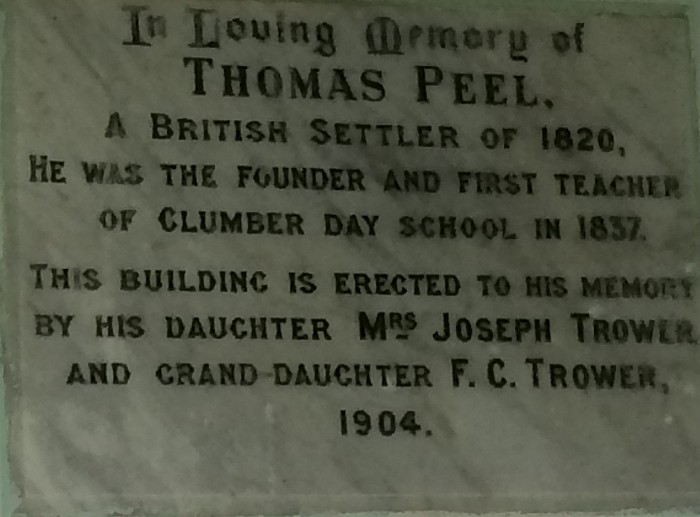
Memorial Plaque for Thomas Peel, first teacher at Clumber School
This marble plaque was incorporated in the last Clumber School to be built in 1904 by the descendants of Thomas Peel, the first school teacher appointed at Clumber in 1837 when the first school was built. Prior to this the churches were also used as places of teaching.
The Class of 1906 at Clumber School with Mr Snelgar as Principal, Bernie Pike as a Pupil Techer and Miss Enslin as Teacher
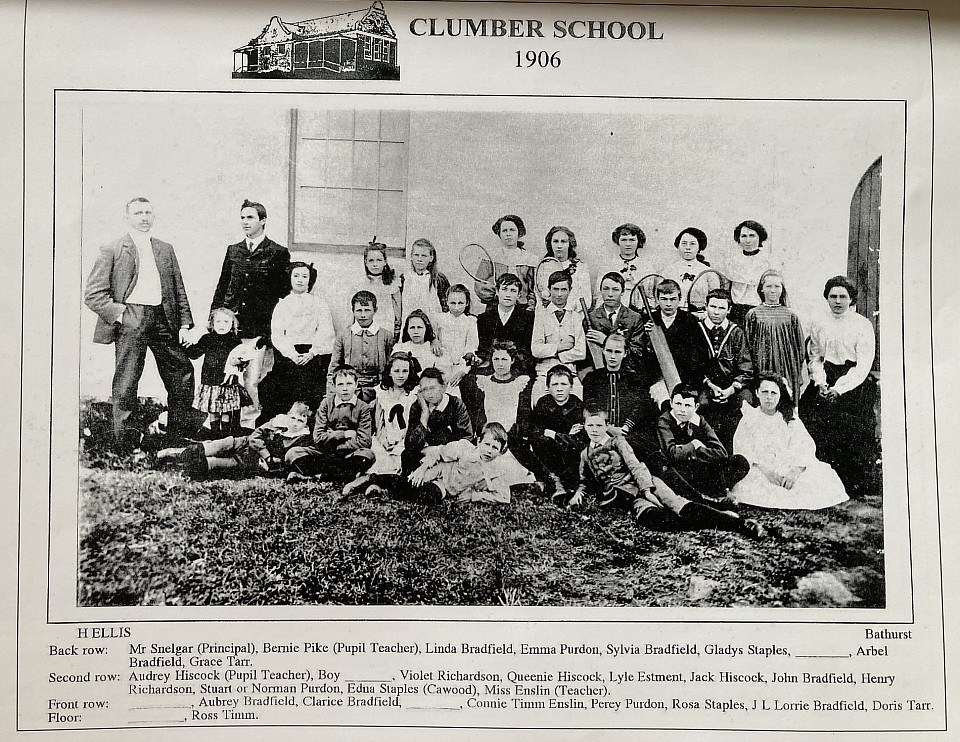
The Clumber School Class of 1906, a year after the opening of the new School in 1905
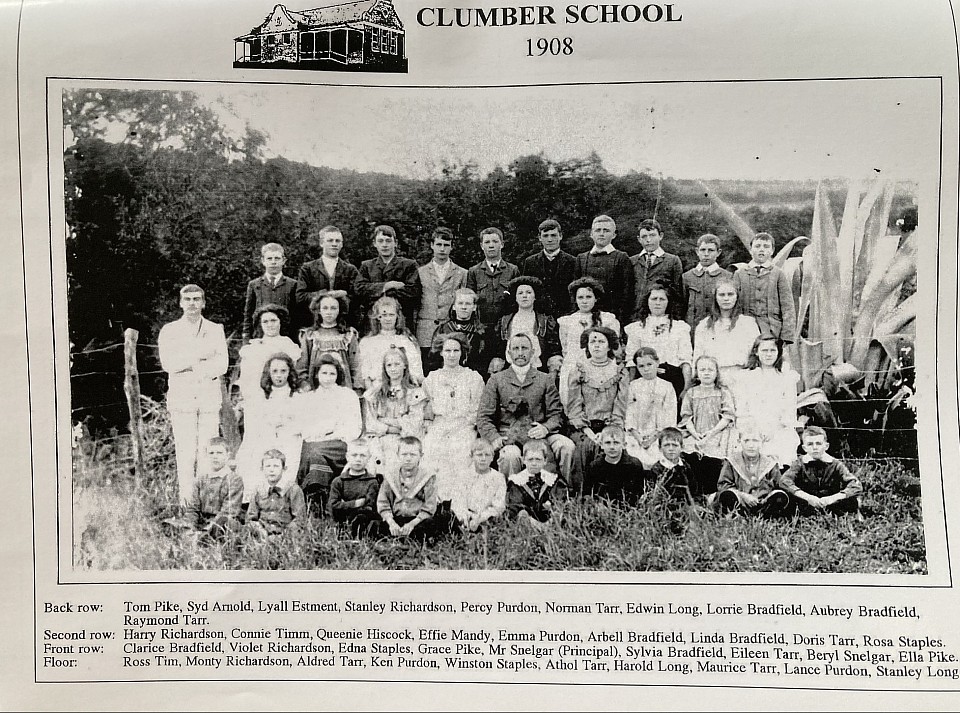
Clumber School Pupils 1908
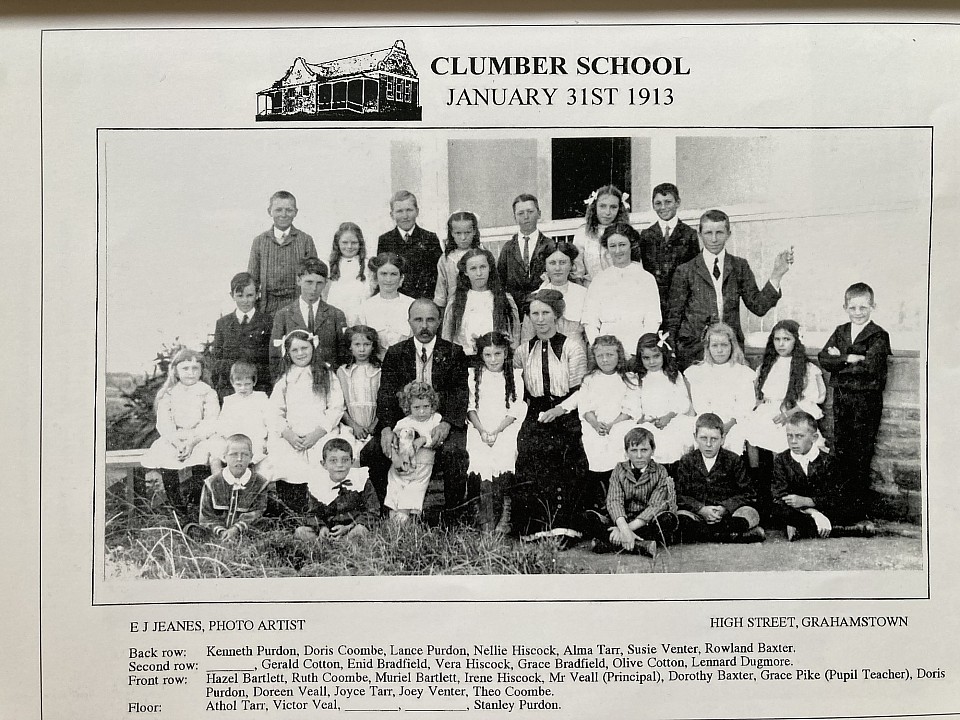
Clumber School Pupils 1913
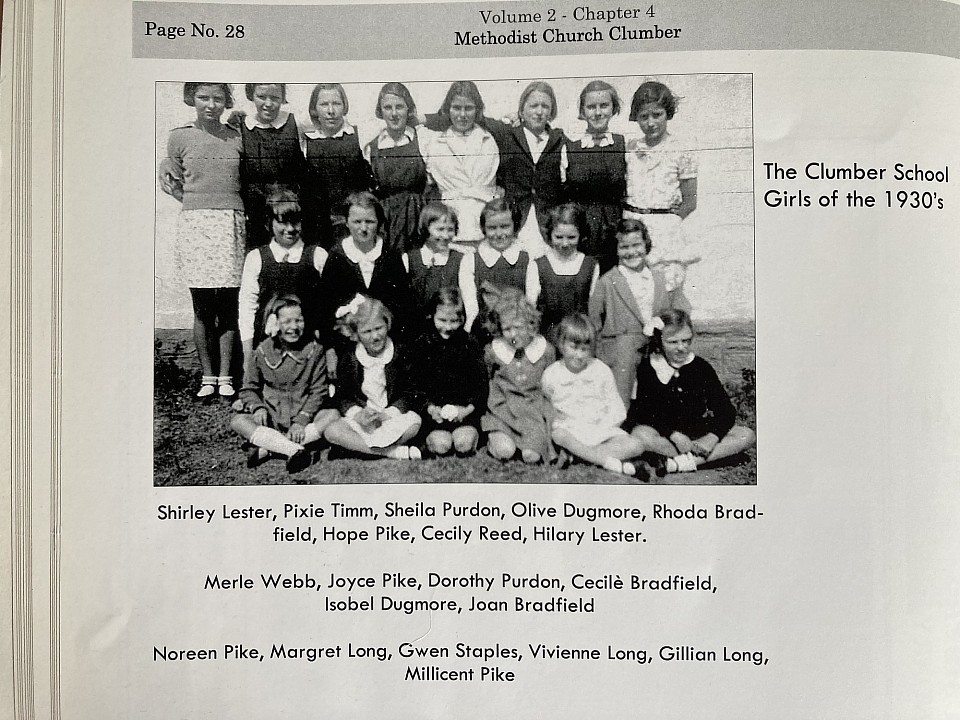
Clumber School Pupils of 1930’s
Pupils of Clumber School in the 1950’s
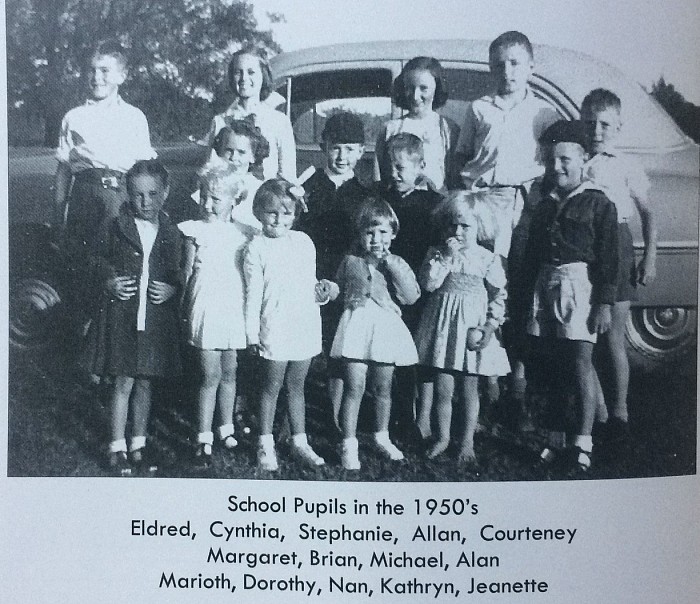
Most of these pupils, schooled at Clumber, are direct descendants of the 1820 Settlers
The successive Clumber Schools have served the children of the district since the 1830’s . Various buildings have housed the pupils over time. This group of children from the 1950’s were schooled in the current building, a National Monument built in 1905.
Clumber School Holds a Special Spot in the Hearts of Those Who Have Passed Through The School Doors
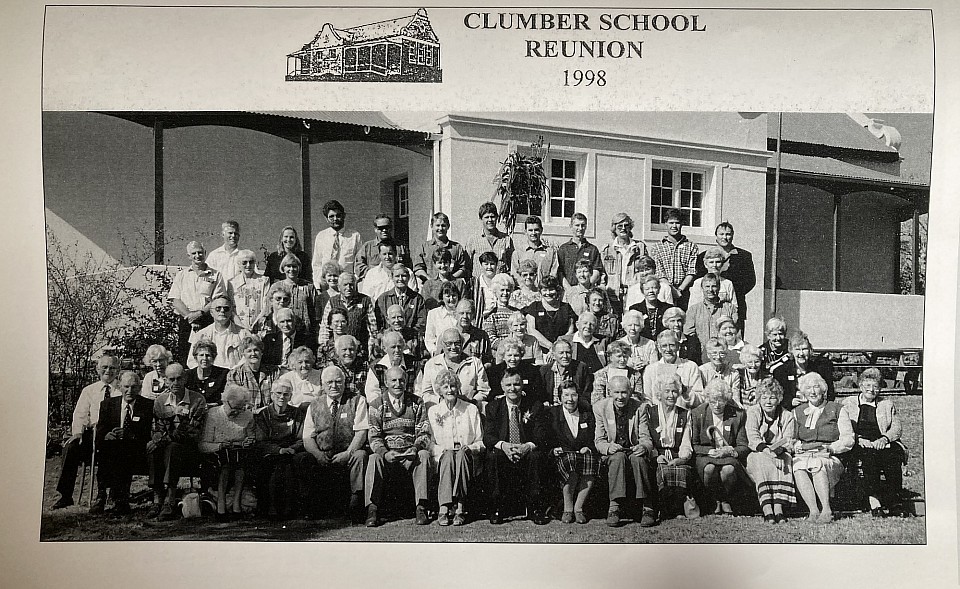
Past Pupils of Clumber Church Gather in a Reunion in 1998

Clumber School opened on 9 February 1905, photographed 2020.